Traditional Dutch Oliebollen
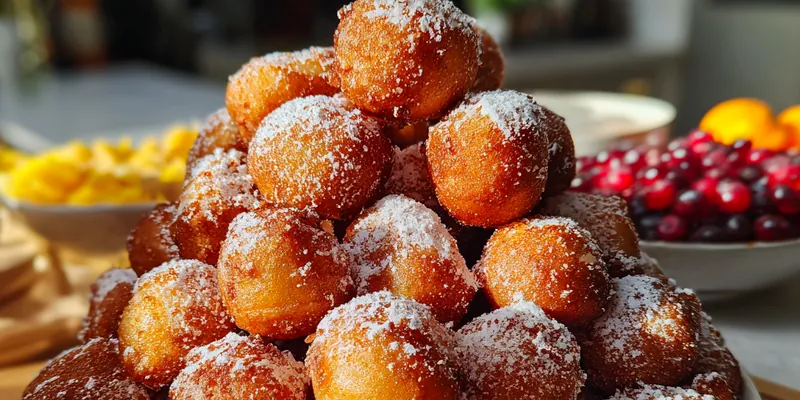
These golden, deep-fried dough balls are the quintessential Dutch New Year's Eve treat. Crispy on the outside, soft and fluffy on the inside, and studded with sweet fruit.

The Secret to Fluffy Interiors
The key to a perfect Oliebol is the rising time. Unlike dense cake donuts, this is a yeast-based batter. You must allow the gluten to develop and the yeast to create air pockets. This ensures the final product is airy and soft, not heavy or doughy.
Temperature control is equally vital. If the oil is too hot, the outside will burn before the inside cooks. If too cool, they will absorb oil and become greasy. Using a kitchen thermometer to maintain 375°F (190°C) is the professional secret to success.
💡 Professional Tip
Use an ice cream scoop dipped in hot oil to measure out your batter. This ensures uniform round shapes and prevents the sticky batter from clinging to the utensil.
Frequently Asked Questions
It is best to fry them right after the dough has risen. However, you can make the batter and let it do a slow rise in the fridge overnight, then bring to room temp before frying.
Your oil was likely too hot. The outside cooked too fast. Lower the heat slightly and ensure they cook for the full 5-6 minutes.
Absolutely. While traditional recipes use raisins and apples, you can omit them for a plain sugared doughnut.
Use a neutral oil with a high smoke point, such as sunflower oil, vegetable oil, or peanut oil. Avoid olive oil.
Store in an airtight container at room temperature for up to 2 days. They can be frozen for up to 2 months.
Reheat in a 350°F oven or air fryer for 3-5 minutes to crisp up the exterior. Microwaving makes them tough.
No, a heavy-bottomed pot (like a Dutch oven) works perfectly. Just use a thermometer to monitor the oil temp.
Yes, use 20g of fresh yeast instead of 10g dried. Crumble it into the warm milk to dissolve.
Recipe Troubleshooting Guide
Dough is too heavy
Problem: The doughnuts are dense like rocks
Solution: The yeast didn't activate properly or the milk was too hot (killing the yeast). Ensure milk is lukewarm and batter doubles in size.
Greasy Texture
Problem: The doughnuts are soaked in oil
Solution: The oil temperature dropped too low. Don't crowd the pan; fry only 4-5 at a time to maintain temperature.
Odd Shapes
Problem: Oliebollen look like amorphous blobs
Prevention: This is actually normal! But for rounder shapes, use a trigger ice cream scoop and drop the batter quickly into the oil.
Batter didn't rise
Problem: After an hour, the batter looks the same
Recovery: Your kitchen might be too cold. Place the bowl in a turned-off oven with a bowl of hot water to create a warm, humid environment.
Burnt Fruit
Problem: Raisins on the outside taste bitter
Prevention: Try to fold the batter over the scoop so the fruit is tucked inside, or accept that a few charred raisins are part of the rustic charm.
Flavor Adjustments
Too Sweet: Add vanilla extract to the batter
Too Salty: Do not skip the salt; it is crucial for flavor balance
Bland: Add cinnamon or nutmeg to the flour mix
Choosing the Fillings
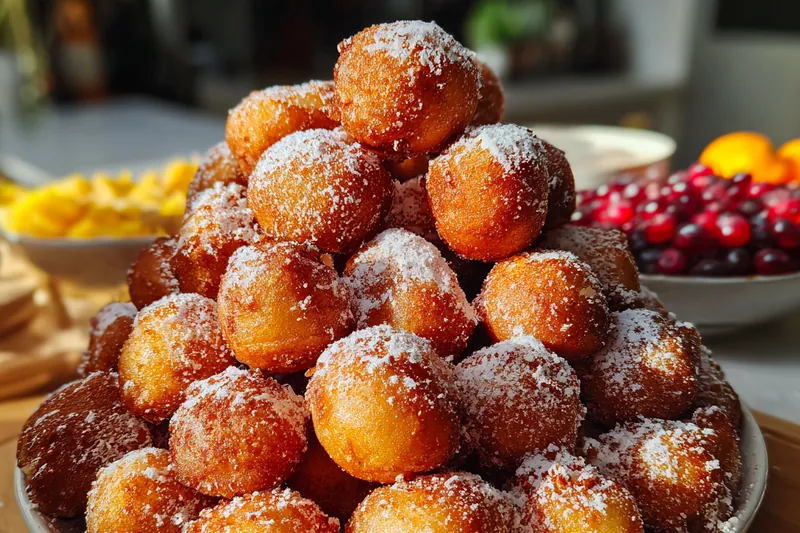
While you can eat Oliebollen plain, the fillings add moisture and flavor complexity. The classic combination is currants (or raisins) and tart apple. The apple steams inside the dough, keeping it moist, while the raisins provide bursts of concentrated sweetness.
Some regions add candied citrus peel (succade) or soak the raisins in rum beforehand. If you choose to soak your dried fruit, ensure you dry them thoroughly before adding to the batter, or the excess liquid will ruin the dough consistency.
Essential Ingredient Notes
- The Apple: Use a tart apple like Granny Smith or Jonagold. They hold their shape better and provide a nice contrast to the sweet dough.
- The Flour: Standard all-purpose flour works best. You don't need fancy bread flour, as we want a soft crumb, not a chewy bread texture.
- The Yeast: Instant or Active Dry yeast both work. Just make sure it's not expired—the foaminess in the milk step is your safety check.
Mastering the Fry
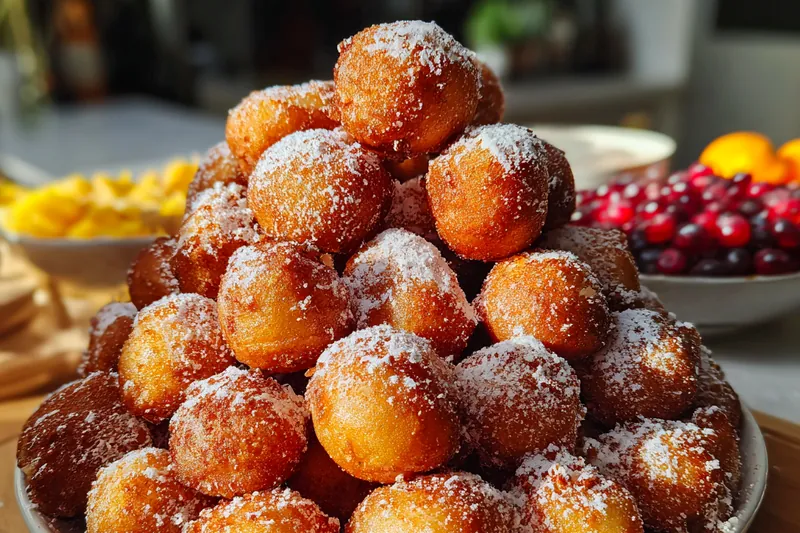
Frying is intimidating for some, but it's simple science. You need enough oil so the balls can float freely and turn over. Interestingly, a perfectly shaped Oliebol will often turn itself over in the oil when the bottom side is done!
Safety is paramount. Never fill your pot more than halfway with oil, as the batter will cause the oil level to rise initially. Keep a lid nearby just in case, and never leave hot oil unattended.
The Scoop Drop
Dip your clean ice cream scoop into the hot oil for 2 seconds, then scoop the batter. The hot oil film on the metal allows the batter to slide right off into the fryer.
Traditional Dutch Oliebollen
📋 Ingredients
For the Batter
- 150g currants or raisinsSoaked and dried
- 1 Granny Smith applePeeled and finely diced
- Zest of 1 lemonAdds brightness
- Powdered sugarGenerous amount for dusting
Fillings & Toppings
- 500g all-purpose flourThe base of the dough
- 500ml lukewarm milkActivates yeast and enriches dough
- 10g dried yeastRising agent
- 30g sugarFeeds the yeast
- 2 large eggsProvides structure
- 1 tsp saltEssential flavor enhancer
- 2L Vegetable OilFor deep frying
Instructions
Soak Fruit
If using raisins or currants, soak them in warm water (or rum) for 15 minutes to plump them up. Drain thoroughly and pat dry with paper towels.
Activate Yeast
In a small bowl, mix the lukewarm milk with the sugar and dried yeast. Let it sit for 5-10 minutes until it becomes frothy.
Make Batter
In a large mixing bowl, combine flour and salt. Pour in the yeast mixture and add the eggs. Mix with a wooden spoon or stand mixer until a sticky, elastic batter forms. It should be looser than bread dough but thicker than pancake batter.
Add Fillings and Rise
Fold in the drained raisins, chopped apple, and lemon zest. Cover the bowl with a damp cloth and let rise in a warm place for about 1 hour, or until doubled in size.
Fry
Heat oil in a deep fryer or heavy pot to 375°F (190°C). Dip two spoons (or an ice cream scoop) in oil, scoop the batter, and carefully drop into the hot oil. Fry 4-5 balls at a time for about 5-6 minutes, flipping halfway, until deep golden brown.
Serve
Remove with a slotted spoon and drain on paper towels lined with a wire rack. Serve warm, heavily dusted with powdered sugar.
Recipe Notes & Tips
Serving Tradition
In the Netherlands, these are traditionally eaten on New Year's Eve, often accompanied by a glass of champagne.
Oil Management
Filter your oil after use. If it hasn't darkened too much, it can be reused for another batch of frying.
Dietary Note
This recipe contains gluten, dairy, and eggs. For a dairy-free version, substitute the milk with soy milk or almond milk.