Seared Steak with Cream
Seared Steak with Cream is a deliciously rich dish that showcases the elegance of French cuisine. This recipe combines perfectly seared steak with a luxurious cream sauce that elevates your dinner experience. Ideal for special occasions or a cozy night in, this dish is easy to prepare yet impressively gourmet. With just a few simple ingredients, you can create a meal that will delight your taste buds.


Why This Seared Steak with Cream Recipe Works
This recipe stands out because of its perfect balance of flavors and textures. The seared steak provides a satisfying crust while the creamy sauce adds a rich, tangy finish. The use of fresh herbs enhances the overall aroma, making each bite memorable. It's an elegant dish that feels special without requiring advanced culinary skills.
The technique of searing the steak at the correct temperature is crucial for achieving a caramelized exterior. Following the resting period allows the juices to redistribute, resulting in a tender and juicy bite. The creamy sauce complements the steak beautifully, ensuring that every mouthful is bursting with flavor.
💡 Professional Tip
For the best results, make sure your steak is at room temperature before searing. This helps achieve a better crust. Use a meat thermometer to check for doneness; 130°F for medium-rare is ideal. Let the steak rest after cooking to retain its juices and ensure a tender texture.
Frequently Asked Questions
It's best to prepare the steak fresh for optimal flavor and texture, though you can make the sauce ahead of time. Store the sauce in the refrigerator and reheat it gently before serving. The steak should be seared just before serving to maintain its juiciness and prevent drying out.
If you're looking for a lighter option, you can use half-and-half or a combination of milk and a thickener like cornstarch. For a dairy-free alternative, coconut cream can provide a similar richness, though it may impart a slight coconut flavor. Adjust seasonings accordingly based on your substitute.
The best way to check for doneness is by using a meat thermometer. For medium-rare, look for an internal temperature of about 130°F. Alternatively, you can use the finger test or check the firmness of the steak when pressed. Remember that the steak will continue to cook slightly while resting.
While it's not recommended to freeze cooked steak, you can freeze the sauce separately. Store the sauce in an airtight container and use it within 2-3 months. When ready to use, thaw it in the refrigerator overnight and reheat gently. Freshly cooked steak is always best enjoyed immediately after preparation.
This dish pairs well with a variety of sides including creamy mashed potatoes, sautéed green beans, or a fresh garden salad. For a heartier option, consider serving it with roasted vegetables or a side of crusty French bread to soak up the delicious sauce.
Leftover Seared Steak with Cream can be stored in an airtight container in the refrigerator for up to 3 days. Ensure the steak and sauce are cooled before sealing. Reheat gently on the stovetop or in the microwave before serving to preserve the flavor and texture.
While it's best to prepare the steak fresh to ensure it stays juicy, you can make the sauce in advance and store it in the refrigerator. Sear and serve the steak just before your meal to enjoy the best flavors and texture.
To reheat, place the steak in a skillet over low heat, adding a splash of broth or water to keep it moist. Cover to allow for even heating. For the sauce, gently warm it in a saucepan until heated through, then combine with the reheated steak before serving.
Recipe Troubleshooting Guide
Too Dry
Problem: If your steak turns out dry, it may have been overcooked or not rested adequately.
Solution: Ensure to monitor the cooking time closely and use a meat thermometer for precise doneness. Always let the steak rest for at least 5 minutes before slicing to allow the juices to redistribute.
Not Crispy Enough
Problem: A lack of crispiness on the steak could result from insufficient searing or moisture on the surface.
Solution: Ensure the steak is dry before seasoning and searing. Use a hot skillet and avoid overcrowding to achieve a nice crust.
Overcooked
Problem: Overcooking can lead to a tough and chewy steak.
Prevention: To prevent this, always use a meat thermometer, and remove the steak from heat just before it reaches your desired doneness. Remember that the steak will continue to cook slightly while resting.
Undercooked Center
Problem: Undercooking can leave the center of the steak raw or too rare for some preferences.
Recovery: If you find that the center is undercooked, return the steak to the skillet for a few more minutes until it reaches the desired temperature, checking with a meat thermometer.
Burnt Exterior
Problem: Burning could occur if the skillet is too hot or if the steak is cooked for too long.
Prevention: Lower the heat if you notice burning and adjust cooking times accordingly. It’s also essential to choose a good quality skillet that retains heat evenly.
Flavor Balance
Too Sweet: If the dish tastes too sweet, add a splash of vinegar or more seasoning.
Too Salty: For overly salty flavors, you can add a little more cream or some unsalted butter to balance it out.
Bland: To enhance bland flavors, try adding fresh herbs, spices, or a squeeze of lemon juice for brightness.
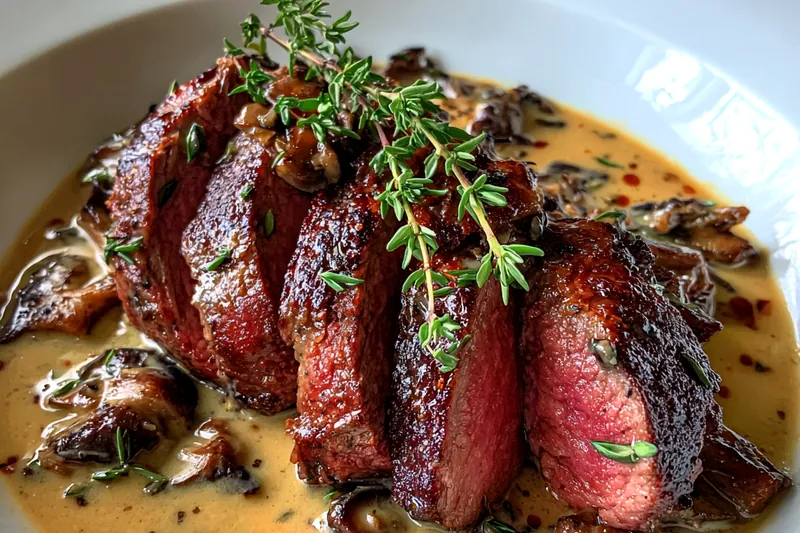
Essential Ingredients for Seared Steak with Cream
The key ingredients for this dish include high-quality beef steak, which forms the backbone of the recipe. Choosing a cut like ribeye or sirloin ensures tenderness and flavor. Fresh herbs and a rich cream sauce elevate the dish, providing depth that complements the meat beautifully.
Using quality ingredients is vital for achieving the best taste in this recipe. Select grass-fed beef for a richer flavor, and opt for organic heavy cream to enhance the creaminess of the sauce. Fresh herbs like thyme and parsley should be used for the best aroma and taste.
Essential Ingredient Notes
- Beef Steak: Opt for a well-marbled cut like ribeye or a tender sirloin. Marbling enhances flavor and juiciness. Allow the steak to come to room temperature before cooking for even doneness.
- Heavy Cream: Choose high-quality heavy cream for a rich, smooth sauce. Avoid using low-fat options, as they won't provide the desired texture. Always check expiration dates to ensure freshness.
- Fresh Herbs: Using fresh herbs like thyme and parsley not only adds flavor but also enhances the dish's visual appeal. Chop them just before use to retain their vibrant color and aroma.

Step-by-Step Cooking Process
Cooking Seared Steak with Cream requires attention to detail but is straightforward. Start by properly seasoning and searing your steak to lock in flavors. The transition to making the sauce is seamless, utilizing the same skillet to maximize flavor.
Achieving the perfect steak involves monitoring the temperature closely and understanding the resting phase. This ensures a juicy and flavorful result, complemented by a creamy sauce that ties the dish together beautifully.
Key Technique for Perfect Seared Steak with Cream
The secret to perfectly seared steak lies in the temperature of both the skillet and the meat. Preheat your skillet until it's very hot, allowing for a good sear without overcooking. Pat the steak dry for a better crust and remember to let it rest after cooking for optimal juiciness.
Seared Steak with Cream
📋 Ingredients
Main Ingredients
- 1 cup butterRoom temperature
- 1 cup heavy creamFor a rich sauce
- 1/2 cup beef brothAdds depth to the sauce
- 2 tablespoons Dijon mustardFor tanginess
- 1 tablespoon Worcestershire sauceEnhances flavor
- 2 teaspoons fresh thymeChopped
- 2 cloves garlicMinced
For the Sauce
- 2 lbs beef steakRibeye or sirloin
- 1 teaspoon saltFor seasoning
- 1/2 teaspoon black pepperFor seasoning
- 2 tablespoons olive oilFor searing
- 1 tablespoon lemon juiceAdds brightness
- 1/4 cup grated Parmesan cheeseFor richness
- 1/2 teaspoon paprikaFor color
- 1 tablespoon butterFor finishing the sauce
Instructions
Season the Steak
Rub the steak with salt and black pepper on both sides. Let it sit at room temperature for about 15 minutes.
Sear the Steak
In a large skillet, heat olive oil over medium-high heat. Once hot, add the steak and sear for about 4-5 minutes on each side until a golden crust forms. Remove from skillet and let rest.
Make the Sauce
In the same skillet, reduce the heat to medium and add the minced garlic. Sauté for 1 minute until fragrant, then add beef broth, Dijon mustard, Worcestershire sauce, and thyme.
Add Cream
Stir in the heavy cream and bring to a gentle simmer. Cook for 5-7 minutes until the sauce thickens slightly.
Finish the Sauce
Add lemon juice, Parmesan cheese, and paprika to the sauce, stirring until well combined and cheese is melted.
Combine Steak and Sauce
Slice the rested steak against the grain and return it to the skillet with the sauce. Coat the steak in the sauce, allowing it to soak up flavors for a couple of minutes.
Serve
Transfer the steak to a serving platter, drizzle with extra sauce, and garnish with fresh parsley.
Enjoy
Serve immediately with your choice of sides such as mashed potatoes or steamed vegetables.
Recipe Notes & Tips
Storage Tips
To store leftovers, place the steak and sauce in separate airtight containers in the refrigerator. Consume within three days for the best quality. Always reheat gently to avoid toughening the meat.
Serving Suggestions
Serve Seared Steak with Cream alongside creamy mashed potatoes or a fresh garden salad. For a special touch, consider pairing it with a glass of red wine to complement the flavors.
Recipe Variations
For a twist, try adding sautéed mushrooms or spinach to the sauce. You can also experiment with different herbs like rosemary or oregano for added depth.