Mini Crème Brûlée Cheesecakes
Decadent mini cheesecakes featuring a creamy vanilla bean filling, buttery graham cracker crust, and a crunchy caramelized sugar topping. The ultimate marriage of two classic desserts.

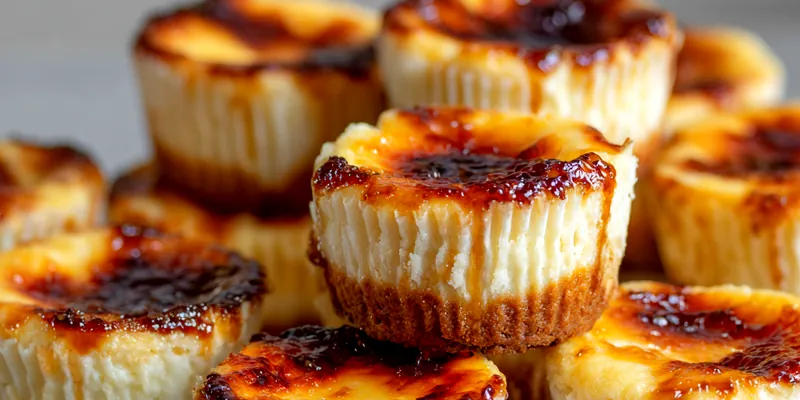
The Science of the Brûlée
The signature hard top of a crème brûlée is achieved through the rapid caramelization of sucrose. Using a kitchen torch allows for precise control, turning the sugar into a glass-like sheet without melting the cheesecake underneath. Superfine sugar works best as it melts quickly and evenly.
The contrast in textures is what makes this dessert successful. The cheesecake must be thoroughly chilled and dense to support the heat of the torch, creating a cold, creamy interior against the hot, crunchy exterior.
💡 Professional Tip
Blot any moisture from the top of the cheesecakes with a paper towel before sprinkling the sugar. Sugar dissolves in water, and wet sugar won't caramelize into a hard shell—it will just become syrup.
Frequently Asked Questions
You can use your oven's broiler, but be very careful. Freezing the cheesecakes for 15 minutes first helps prevent melting. Place them on the highest rack and watch closely for 1-2 minutes.
Cracks usually happen from overmixing (adding too much air) or overbaking. Mix on low speed, and remove them from the oven while the centers still have a slight wobble.
Yes! You can bake the cheesecakes up to 3 days in advance. Keep them in the fridge. However, do not torch the sugar until right before serving, or the crust will soften.
For these mini versions, a water bath isn't strictly necessary if you bake at a lower temperature (325°F). However, baking them gently is key to a smooth texture.
It's a thick syrup containing real vanilla bean specks. It provides a stronger flavor and visual appeal than extract. You can substitute 1:1 with high-quality vanilla extract.
Use high-quality cupcake liners. Once chilled, the cheesecakes will be firm and easy to unwrap. Do not try to remove them while warm.
I don't recommend it. Full-fat brick cream cheese provides the structure and creaminess needed. Low-fat versions have higher water content and may result in a rubbery texture.
Digestive biscuits, vanilla wafers, or even Biscoff cookies make excellent substitutes for the crust base.
Recipe Troubleshooting Guide
Soggy Crust
Problem: The bottom crust is wet or falling apart
Solution: Ensure you pre-bake the crust for 5 minutes before adding filling. Also, ensure the butter-to-crumb ratio is correct so it packs tightly.
Burnt Sugar is Bitter
Problem: The topping tastes acrid or looks black
Solution: Keep the torch moving constantly. Don't hold it in one spot. Stop when the sugar is amber-colored, not black.
Lumpy Filling
Problem: White specks of cream cheese in the batter
Prevention: The cream cheese MUST be at room temperature before mixing. If it's cold, it won't blend smoothly with the sugar and eggs.
Soft Topping
Problem: The sugar crust turned into liquid after an hour
Recovery: Sugar absorbs moisture from the air and the cheesecake. Only torch immediately before serving to maintain the crunch.
Sinkholes
Problem: Centers collapsed after cooling
Prevention: This happens when they are whipped too much (too much air) or cooled too rapidly. Cool gradually in the oven with the door cracked.
Flavor Adjustments
Too Sweet: Serve with tart berries like raspberries to cut the sweetness
Too Salty: Add a pinch of sea salt to the crust mixture
Bland: Double the vanilla or add lemon zest to the filling
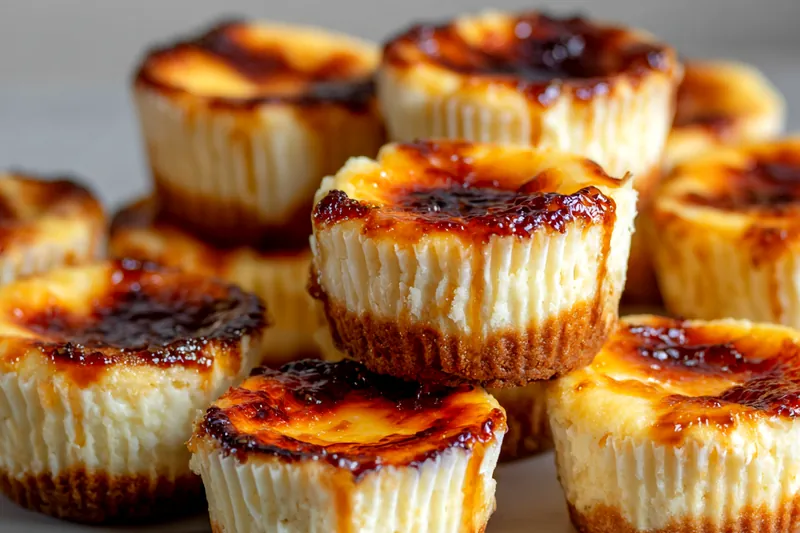
Selecting Premium Ingredients
Since cheesecake has so few ingredients, quality is paramount. Use full-fat, brick-style cream cheese (not the tub spread). The high fat content ensures the velvety texture that characterizes a luxury dessert.
Real vanilla is the soul of this dish. While artificial extract works in a pinch, vanilla bean paste adds those signature black specks and a floral complexity that elevates the simple filling into something elegant.
Essential Ingredient Notes
- Cream Cheese: Always use brick-style full-fat cheese. Ensure it is completely soft at room temperature to avoid lumps.
- Vanilla Bean Paste: Provides the visual appeal of vanilla seeds without the hassle of scraping pods. Adds intense flavor.
- Sour Cream: Adds a slight tang that cuts through the richness of the cheese and sugar, creating a balanced flavor profile.
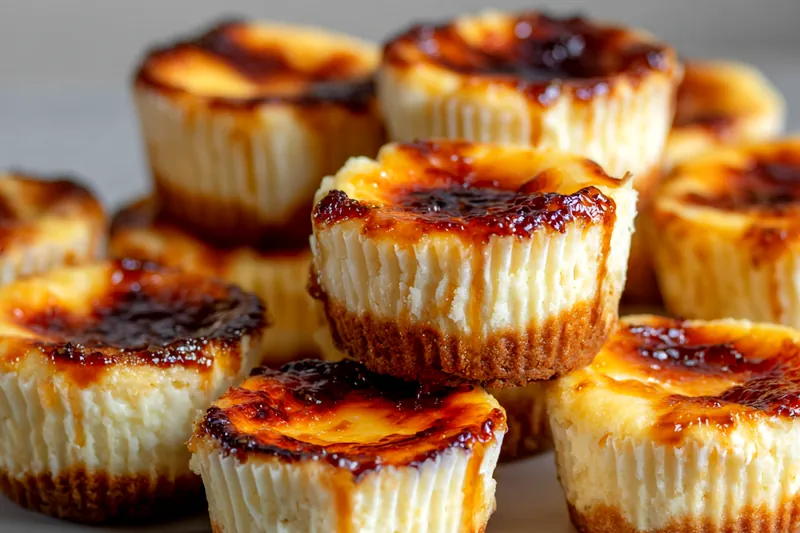
Mastering the Torch
Torching is the fun part, but requires a steady hand. Hold the flame about 2-3 inches away from the sugar. Move in small circles. You want the sugar to bubble and turn amber. If it starts smoking heavily, pull back.
Safety first: Perform this step on a heat-safe surface like a metal baking sheet or marble slab. Do not torch on a wooden cutting board or near paper liners/wrappers.
Room Temperature Mixing
Cold ingredients are the enemy of smooth cheesecake. Take eggs, sour cream, and cheese out of the fridge 2 hours before starting. This ensures a silky, lump-free batter.
Mini Crème Brûlée Cheesecakes
📋 Ingredients
Cheesecake Filling
- 1 1/2 cups graham cracker crumbsBase of the crust
- 6 tbsp unsalted butter, meltedBinds the crust
- 1/4 cup granulated sugarFor sweetening the crust
- 4 tbsp superfine sugarFor the caramelized topping
Crust & Topping
- 16 oz cream cheeseFull fat, room temperature
- 1/2 cup granulated sugarFor the filling
- 2 large eggsRoom temperature
- 1/4 cup sour creamAdds tang and moisture
- 1 tsp vanilla bean pasteOr high quality extract
- Pinch of saltEnhances flavor
Instructions
Prepare Crust
Preheat oven to 325°F (163°C). Line a standard muffin tin with paper liners. Mix graham cracker crumbs, melted butter, and 1/4 cup sugar. Press about 1 tablespoon of mixture firmly into the bottom of each liner. Bake for 5 minutes, then cool.
Make Filling
In a large bowl, beat room temperature cream cheese and 1/2 cup sugar until smooth and creamy. Add eggs one at a time, mixing on low speed. Stir in vanilla, sour cream, and salt. Do not overmix.
Bake Cheesecakes
Divide the batter evenly among the muffin cups (filling almost to the top). Bake for 18-22 minutes until centers are set but slightly jiggly. Turn off oven and leave door slightly ajar for 10 minutes.
Chill
Remove from oven and cool completely on a wire rack. Refrigerate for at least 4 hours or overnight to set fully.
Caramelize Top
Just before serving, remove wrappers. Sprinkle about 1 teaspoon of superfine sugar evenly over the top of each cheesecake. Use a kitchen torch to melt the sugar until deep golden brown and bubbly.
Recipe Notes & Tips
Make Ahead
The baked cheesecakes (without the burnt sugar top) can be frozen for up to 1 month. Thaw in the fridge overnight before adding sugar and torching.
Serving Suggestions
These are rich enough to stand alone, but a few fresh raspberries or a dollop of whipped cream on the side adds a nice fresh element.
Variations
Try a chocolate crust by using crushed Oreos instead of graham crackers, or add a teaspoon of espresso powder to the filling for a coffee infusion.