Luscious Lemon Meringue Cheesecake
A showstopping dessert featuring a buttery graham cracker crust, creamy lemon cheesecake filling, tangy lemon curd, and a crown of toasted meringue. The ultimate balance of sweet and tart.

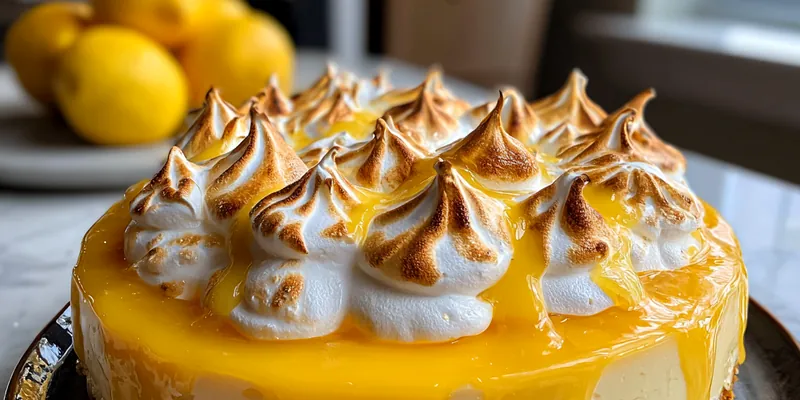
The Art of the Meringue
Achieving the perfect meringue topping requires clean equipment and patience. Ensure your mixing bowl is completely free of grease, as even a speck of fat can prevent egg whites from whipping. Room temperature egg whites will also yield more volume than cold ones.
For this cheesecake, we use a Swiss-style meringue or a simple French meringue that is toasted. The toasting not only adds a beautiful visual contrast but also provides a lovely marshmallow-like flavor and texture that pairs perfectly with the tangy lemon curd.
💡 Professional Tip
If you don't have a kitchen torch, you can brown the meringue under the oven broiler for 1-2 minutes. Watch it like a hawk, as it can go from toasted to burnt in seconds!
Frequently Asked Questions
Yes! The cheesecake is actually best made a day in advance to fully set. Add the lemon curd and meringue topping just before serving for the best texture and presentation.
Cracks happen due to overbaking or cooling too quickly. However, with this recipe, the meringue and lemon curd topping will completely hide any cracks, making it a stress-free bake!
While a water bath helps ensure a creamy texture and flat top, it's not strictly necessary here since we are covering the top. baking at a lower temperature works well too.
Absolutely. High-quality jarred lemon curd is a great time-saver. You'll need about 1 cup (240ml) to drizzle generously over the cheesecake.
Store loosely covered in the refrigerator for up to 3 days. Note that the meringue may start to 'weep' (release liquid) after day 1, but it will still taste delicious.
You can freeze the baked cheesecake base (without curd and meringue). Wrap tightly and freeze for up to 2 months. Thaw in the fridge, then add toppings fresh.
No problem! You can pile the meringue onto the center of the cake and use the back of a spoon to create swirls and peaks. It creates a beautiful, rustic look.
Yes, Meyer lemons are sweeter and more floral. If using them, you might want to slightly reduce the sugar in the curd to maintain that signature tartness.
Recipe Troubleshooting Guide
Weeping Meringue
Problem: Liquid pooling under the meringue topping
Solution: Apply meringue while the curd is still slightly warm, or ensure sugar is fully dissolved in egg whites. Humidity can also cause weeping.
Runny Lemon Curd
Problem: Curd slides off the cake too fast
Solution: Cook the curd longer until it coats the back of a spoon thickly. Ensure it is chilled (it thickens as it cools) before pouring.
Lumpy Filling
Problem: Cheesecake filling has white lumps
Prevention: Ensure cream cheese is completely at room temperature before mixing. If cold, it won't blend smoothly with the eggs and sugar.
Soggy Crust
Problem: Base is wet rather than crunchy
Recovery: Pre-bake the crust as directed and let it cool. Ensure the butter ratio is correct; too much butter can pool at the bottom.
Burnt Meringue
Problem: Tips are black instead of golden brown
Prevention: Move the torch constantly and keep it 3-4 inches away from the meringue. If using a broiler, rotate the pan every 20 seconds.
Flavor Balance Issues
Too Sweet: Increase the lemon juice in the curd or add zest to the meringue
Too Salty: Use unsalted butter for the crust and curd
Bland: Add more lemon zest to the filling; that's where the fragrant oils are
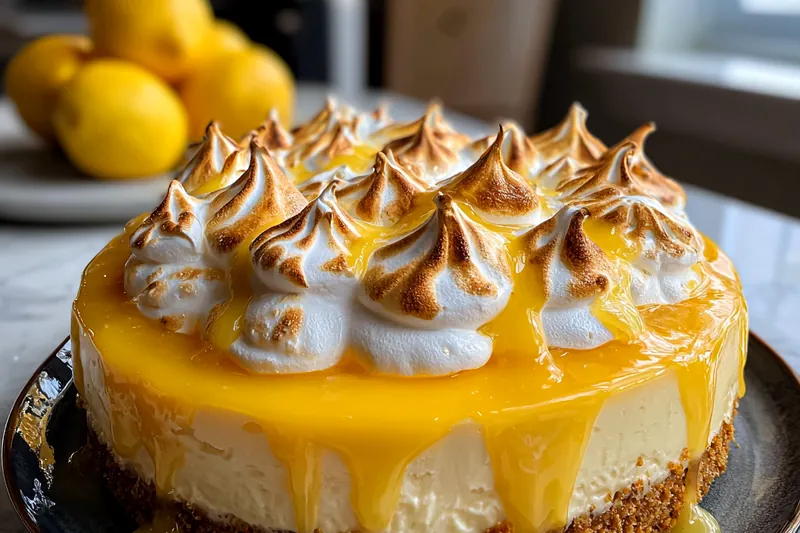
Selecting Premium Ingredients
The quality of cream cheese is paramount for a silky texture. Use full-fat block cream cheese, not the spreadable tub variety, which contains too much air and water. This ensures a dense, rich mouthfeel that defines a great cheesecake.
Fresh lemons are non-negotiable for this recipe. Bottled lemon juice lacks the bright, floral notes of fresh citrus. You'll need the zest (the yellow skin) for the filling and the juice for the curd, utilizing the whole fruit for maximum flavor impact.
Essential Ingredient Notes
- Cream Cheese: Use full-fat, brick-style cream cheese. Bring to room temperature before using to prevent lumps.
- Fresh Lemons: Pick lemons that feel heavy for their size; they have more juice. Zest them before juicing!
- Eggs: Room temperature eggs emulsify better into the batter, creating a smoother, more uniform texture.
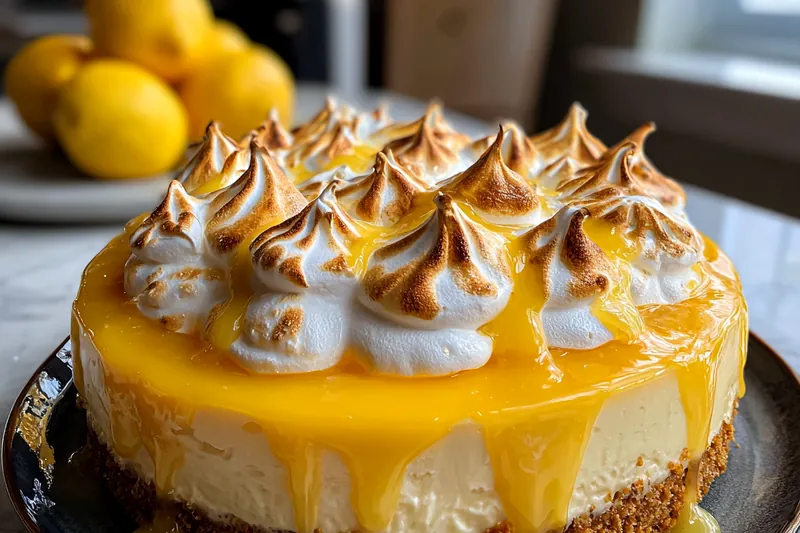
Mastering the Assembly
Timing is key for the assembly. The cheesecake base must be thoroughly chilled (at least 4 hours, preferably overnight) before adding the warm toppings. This temperature contrast helps the structure hold up when you slice it.
The lemon curd acts as a delicious glue between the cheesecake and the meringue. Let the curd drip naturally down the sides for that appetizing, rustic look seen in bakeries. Don't worry about perfection; the organic drips make it look even more tempting.
The Torch Technique
Hold the torch at a 45-degree angle. Keep the flame moving in small circles over the peaks. You want a mix of white, golden, and dark brown spots for visual depth.
Luscious Lemon Meringue Cheesecake
📋 Ingredients
For the Cheesecake
- 4 large egg yolksFor rich, yellow curd
- 150g granulated sugarSweetens the tart lemon
- 80ml fresh lemon juiceAbout 2-3 lemons
- 60g unsalted butter, cubedMakes the curd glossy
- 4 large egg whitesRoom temperature for volume
- 200g sugarFor the meringue
- 1/2 tsp cream of tartarStabilizes the foam
For the Toppings
- 250g graham cracker crumbsFine crumbs for sturdy base
- 115g butter, meltedBinds the crust
- 900g cream cheeseSoftened to room temp
- 200g sugarFor the filling
- 120ml sour creamAdds tang and softness
- 4 large eggsProvides structure
- 1 tbsp lemon zestEssential citrus oil flavor
Instructions
Prepare the Crust
Mix graham cracker crumbs and melted butter in a bowl. Press firmly into the bottom and slightly up the sides of a 9-inch springform pan. Bake at 325°F (160°C) for 10 minutes, then cool.
Make Cheesecake Filling
Beat softened cream cheese and sugar until smooth. Mix in sour cream, lemon juice, and zest. Add eggs one at a time, mixing on low speed until just blended. Pour over crust.
Bake the Cheesecake
Bake at 325°F (160°C) for 55-65 minutes until the center is almost set but still jiggles slightly. Turn off oven, crack door, and let cool inside for 1 hour. Chill in fridge for 4+ hours.
Make Lemon Curd
Whisk egg yolks, sugar, and lemon juice in a double boiler until thickened (about 10 mins). Remove from heat, whisk in butter. Let cool slightly, then pour over chilled cheesecake.
Meringue & Torch
Whip egg whites and cream of tartar to soft peaks. Gradually add sugar, whipping to stiff glossy peaks. Pipe onto cheesecake. Use a kitchen torch to brown the meringue tips. Serve immediately.
Recipe Notes & Tips
Chilling Time
Don't rush the chilling process. The cheesecake needs at least 4 hours in the fridge to firm up properly before cutting.
Serving Suggestions
Serve with fresh berries or candied lemon slices for extra decoration. A cup of Earl Grey tea pairs beautifully with the citrus notes.
Crust Variations
For a different flavor profile, try using gingersnap cookies or digestive biscuits for the crust instead of graham crackers.