Crispy Coconut-Curry Fish with Mango Salsa
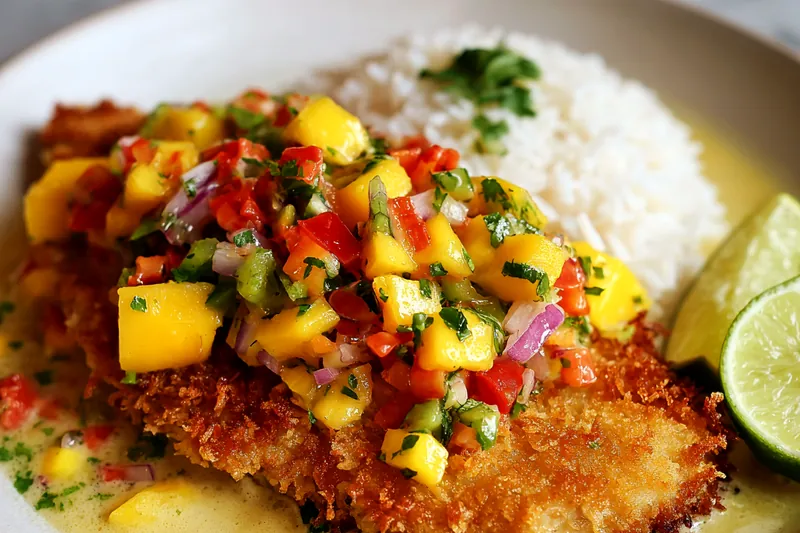
A vibrant combination of textures and flavors, this Crispy Coconut-Curry Fish features a golden, crunchy exterior that gives way to flaky, tender fish. It's served over a rich and aromatic red curry sauce and topped with a refreshing, sweet-and-spicy mango salsa for the ultimate tropical meal.


The Key to a Perfect Crust
Achieving the perfect crispy coating is all about the dredging process. By using a three-step method with flour, egg, and a panko-coconut mixture, you ensure the crust adheres well and fries up golden brown. The flour helps dry the surface, the egg acts as a glue, and the final mix provides the ultimate crunch.
The combination of panko breadcrumbs and shredded coconut is crucial. Panko is lighter and crispier than regular breadcrumbs, while the coconut adds a delightful tropical flavor and extra texture. Spices in the coating also season the fish right from the outside.
💡 Professional Tip
Press the fish firmly into the coconut-panko mixture to ensure a thick, even coating. Let the coated fish rest for a few minutes on a wire rack before frying to help the crust set.
Frequently Asked Questions
Any firm white fish works well, such as cod, halibut, tilapia, or snapper. These varieties hold together well during frying and have a mild flavor that complements the bold curry and salsa.
Yes, the curry sauce can be made up to 2 days in advance. Store it in an airtight container in the refrigerator and reheat gently over low heat before serving, adding a splash of water or coconut milk if it has thickened too much.
The spice level depends on the red curry paste you use. You can adjust the amount of paste to your liking. Start with less if you prefer a milder sauce, or add a little more for extra heat.
You can, though it won't be quite as crispy. Bake at 400°F (200°C) on a greased wire rack set over a baking sheet for 15-20 minutes, or until the fish is cooked through and the crust is golden.
You can use thawed frozen mango chunks, though fresh is best for texture. Alternatively, a pineapple salsa or a simple cucumber and red onion salad would also provide a nice fresh contrast.
The fish is done when the crust is golden brown and the flesh is opaque and flakes easily with a fork. An internal temperature of 145°F (63°C) is ideal.
This dish is great served over steamed jasmine or coconut rice to soak up the delicious curry sauce. A side of steamed green beans or bok choy also works well.
Yes, desiccated coconut can be used. It has a finer texture, so your crust will be less chunky but still have a great coconut flavor. You may need to use slightly less than the shredded amount.
Recipe Troubleshooting Guide
Soggy Crust
Problem: The coating doesn't stay crispy after frying
Solution: Ensure the oil is hot enough before adding the fish, and don't overcrowd the pan. Drain the fried fish on a wire rack instead of paper towels to prevent steam from making the bottom soggy.
Burnt Coconut
Problem: The coconut in the crust burns before the fish is cooked
Solution: Coconut burns easily. Lower the heat to medium and monitor closely. If the fish is thick, you can finish cooking it in a 350°F oven for a few minutes after the initial fry.
Sauce Too Thin/Thick
Problem: Curry sauce consistency is not right
Prevention: If too thin, simmer a little longer to reduce. If too thick, whisk in a tablespoon or two of water or broth until it reaches a pourable, creamy consistency.
Bland Fish
Problem: The fish itself lacks flavor
Recovery: Don't skip seasoning the flour and the panko-coconut mixture with salt and spices. You can also lightly salt the fish fillets before dredging.
Coating Falling Off
Problem: The crust separates from the fish during cooking
Prevention: Make sure to pat the fish dry before dredging. Don't skip the flour step, as it helps the egg adhere. Let the coated fish set for a few minutes before frying.
Flavor Balance Issues
Too Sweet: Add more lime juice or a dash of fish sauce to the curry sauce or salsa
Too Salty: Serve with unsalted rice or add a squeeze of fresh lime to cut the saltiness
Bland: Adjust seasoning in the sauce with more curry paste or fish sauce, and ensure salsa has enough lime and salt
Selecting the Best Ingredients
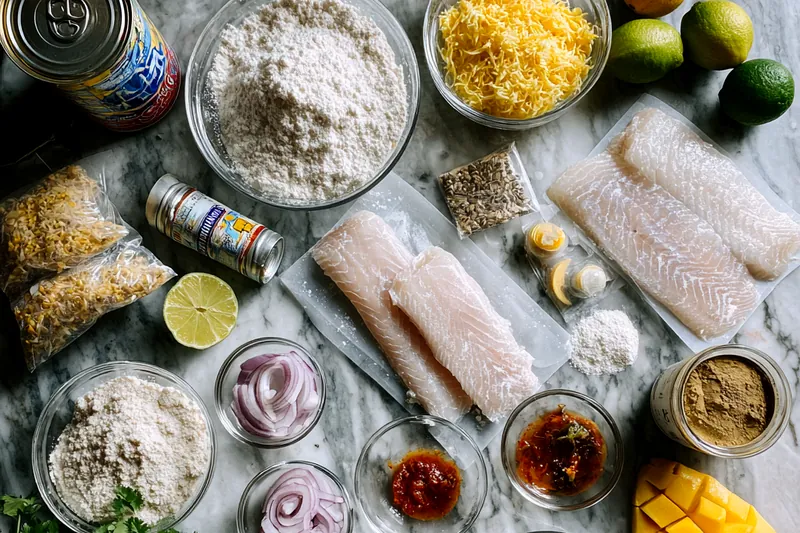
The quality of your fish is paramount. Choose fresh, firm white fish fillets that smell clean like the ocean, not fishy. The thickness of the fillets will determine the cooking time, so try to select pieces of uniform size for even cooking.
For the salsa, use a ripe mango that is slightly soft to the touch and fragrant. A ripe mango provides the necessary natural sweetness to balance the savory curry and the acidity of the lime juice. Fresh cilantro is also key for that burst of herbaceous flavor.
Essential Ingredient Notes
- White Fish Fillets: Opt for sustainable options like cod, halibut, or MSC-certified tilapia. Avoid very delicate fish like sole, which may fall apart during frying.
- Coconut Milk: Use full-fat canned coconut milk for the richest, creamies curry sauce. Light coconut milk will result in a much thinner sauce with less flavor.
- Red Curry Paste: The brand of curry paste can vary in heat and saltiness. Taste your sauce as you go and adjust the amount accordingly. Start with less if you are sensitive to spice.
Mastering the Frying and Flavoring
Frying the fish requires hot oil, but not so hot that the coconut burns instantly. A medium-high heat is generally best. You want the coating to become golden and crisp in the time it takes for the fish to cook through. Listen for a steady sizzle when you place the fish in the pan.
The curry sauce should be a balance of creamy, savory, and slightly sweet. Don't rush the simmering process; it allows the flavors of the curry paste, garlic, and coconut milk to meld beautifully. The final addition of lime juice brightens the entire sauce.
The Three-Step Dredge
Set up your station left to right: flour, egg, then coconut mixture. Use one hand for dry ingredients and the other for wet to keep your fingers cleaner and prevent clumps in the coating mixtures.
Crispy Coconut-Curry Fish with Mango Salsa
📋 Ingredients
For the Fish & Crust
- 400ml full-fat coconut milkProvides the creamy base for the sauce
- 30g red curry pasteAdds depth, spice, and color
- 15ml fish sauceEssential for savory umami flavor
- 15ml lime juiceAdds brightness and acidity
- 1 tsp brown sugarBalances the heat and acidity
- 1 large ripe mango, dicedThe star of the fresh salsa
- 1/4 red onion, finely choppedAdds a sharp crunch to the salsa
- 1/4 cup fresh cilantro, choppedProvides fresh, herbaceous notes
For the Curry Sauce & Salsa
- 4 white fish fillets (approx. 150g each)Firm fish like cod or halibut works best
- 60g (1 cup) panko breadcrumbsCreates a super crispy exterior
- 45g (1/2 cup) unsweetened shredded coconutAdds tropical flavor and texture
- 2 large eggs, beatenHelps the coating adhere to the fish
- 60g (1/2 cup) all-purpose flourFor the initial dusting of the fish
- 1 tsp curry powderSeasoning for the crust
- 45ml coconut oilFor frying, enhances coconut flavor
Instructions
Prepare the Salsa
In a medium bowl, combine the diced mango, red onion, cilantro, jalapeño (if using), lime juice, and salt. Toss well to combine and set aside in the refrigerator to let flavors meld.
Make the Curry Sauce
In a small saucepan, heat a teaspoon of coconut oil over medium heat. Sauté the minced garlic and red curry paste for 1 minute until fragrant. Whisk in the coconut milk, fish sauce, lime juice, and brown sugar. Simmer gently for 5-7 minutes until slightly thickened. Keep warm.
Set Up Dredging Station
Prepare three shallow dishes. Place flour in the first. In the second, beat the eggs. In the third, combine panko, shredded coconut, curry powder, turmeric, salt, and pepper.
Coat and Cook Fish
Pat fish fillets dry. Dredge each fillet in flour, shake off excess, dip into egg, then press firmly into the coconut-panko mixture to coat evenly. Heat coconut oil in a large skillet over medium-high heat. Fry fish for 3-4 minutes per side until golden brown and crispy. Transfer to a paper towel-lined plate.
Assemble and Serve
To serve, spoon a generous amount of the curry sauce onto each plate. Top with a crispy fish fillet and a generous scoop of mango salsa. Garnish with extra cilantro and lime wedges if desired.
Recipe Notes & Tips
Make Ahead
The mango salsa and curry sauce can both be made a day in advance and stored in the refrigerator. Gently reheat the sauce before serving. The fish is best fried just before serving to maintain its crispiness.
Serving Suggestions
Serve this dish over steamed jasmine rice or coconut rice for a complete meal. Steamed vegetables like snap peas, broccoli, or bok choy make excellent side dishes.
Variations
For a different flavor profile, try using green or yellow curry paste instead of red. You can also substitute the mango in the salsa with fresh pineapple or peaches for another sweet twist.